Archimedes of Syracuse
Mathematician, inventor, engineer, and defender of Syracuse, Archimedes is widely regarded to be the greatest scientific mind of classical antiquity.
THE MAN BEHIND THE GENIUS
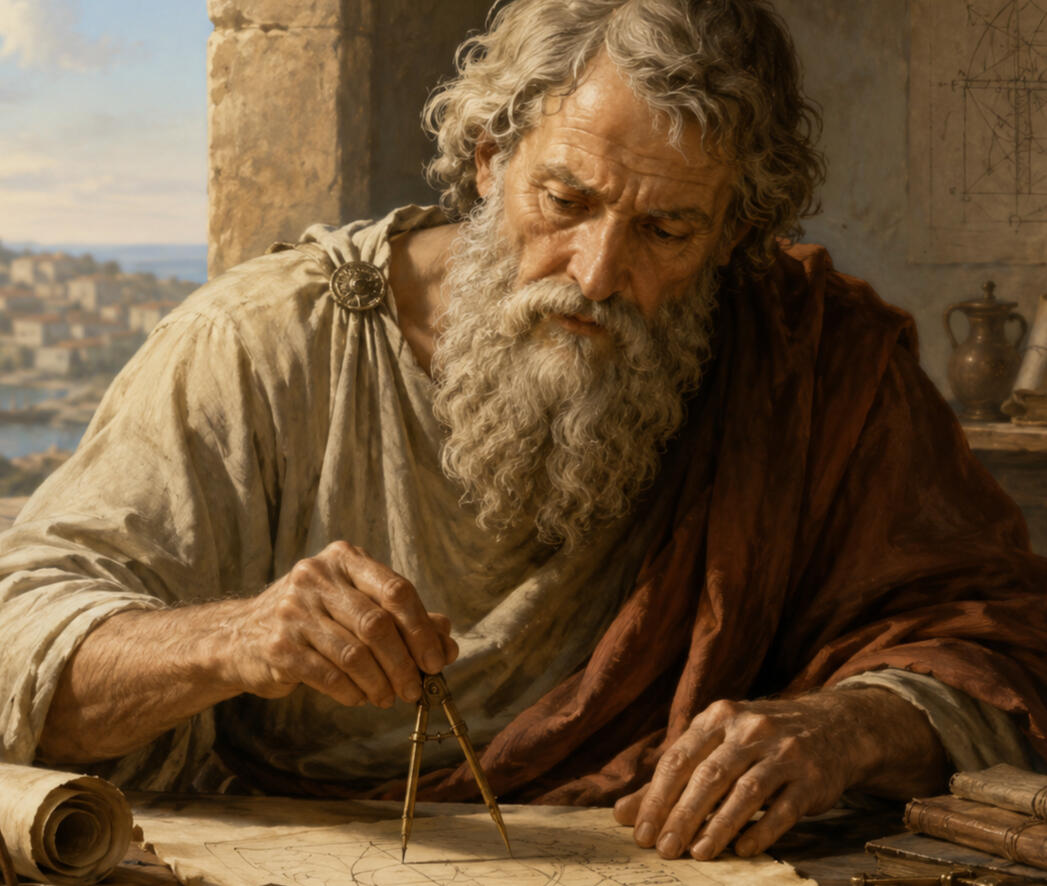
Born in 287 B.C., Archimedes devoted his life, even his last day alive, to studying nature's laws.Ancient writers described him as a man so absorbed in scientific thought that he often forgot to eat or attend to everyday affairs.
Read More →
EUREKA
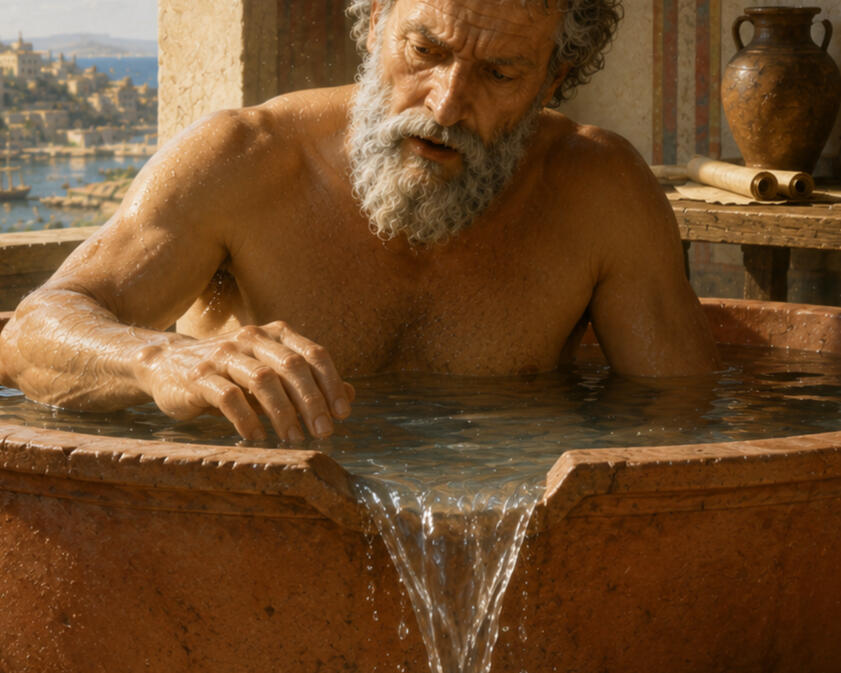
Archimedes' most famous discovery began with a simple observation. Stepping into a bath, he noticed water spill over the rim, and realised that an object's volume could be measured by the amount of liquid it displaced.According to tradition, Archimedes was so excited that he ran naked through the streets shouting:"Eureka!" — "I have found it!"The principle of displacement is one of the most significant scientific insights of the classical world.
Read More →
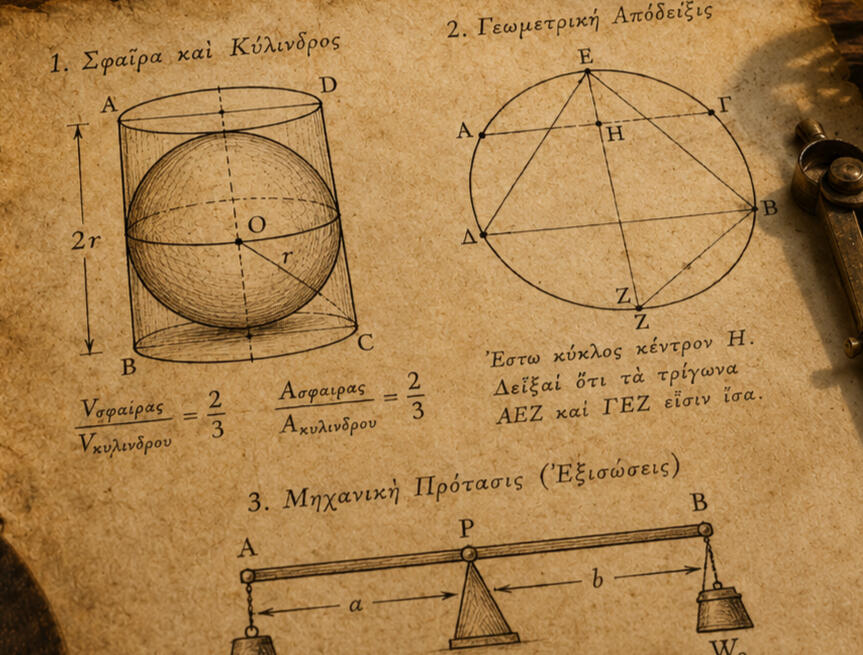
Master of Mathematics
Long before modern science, Archimedes explored circles, spheres, levers, and numbers with extraordinary precision.His work in geometry and mechanics placed him centuries ahead of his time, and many of his ideas would later echo through the development of modern mathematics and physics.
Read More →
Machines of War
When Rome laid siege to Syracuse in 214 BC, Archimedes turned mathematics into a weapon, designing powerful catapults, stone-throwers, and ingenious defensive machines to protect the city.Ancient writers described giant cranes that seized enemy ships, lifting them from the sea before crashing them back into the waves, and mirrors that concentrated sunlight setting Roman vessels ablaze—a device known as the Mirror Device (later the "Death Ray").
Read More →
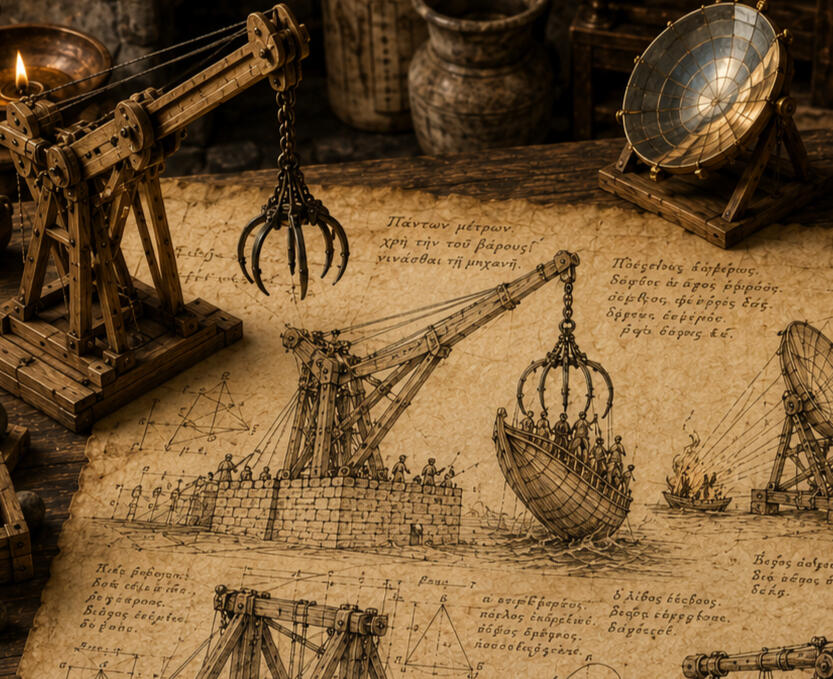
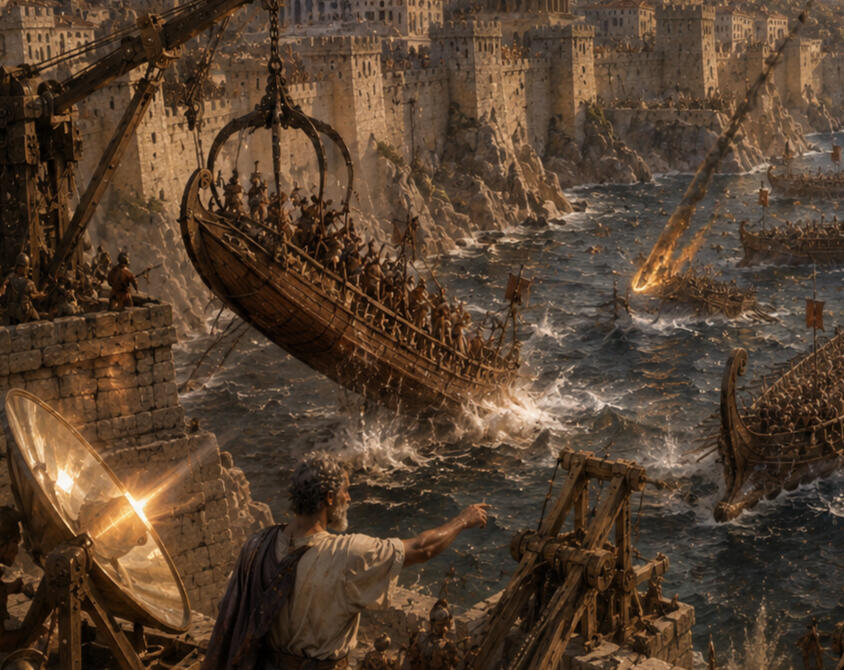
the seige of syracuse
For nearly three years, the city resisted the power of republican Rome.As the forces under the command of consul Marcus Marcellus attacked by land and sea, Archimedes' machines turned the city into an impenetrable fortress, making the war for Syracuse seem more like a legend than real life.
Read More →
death of Archimedes
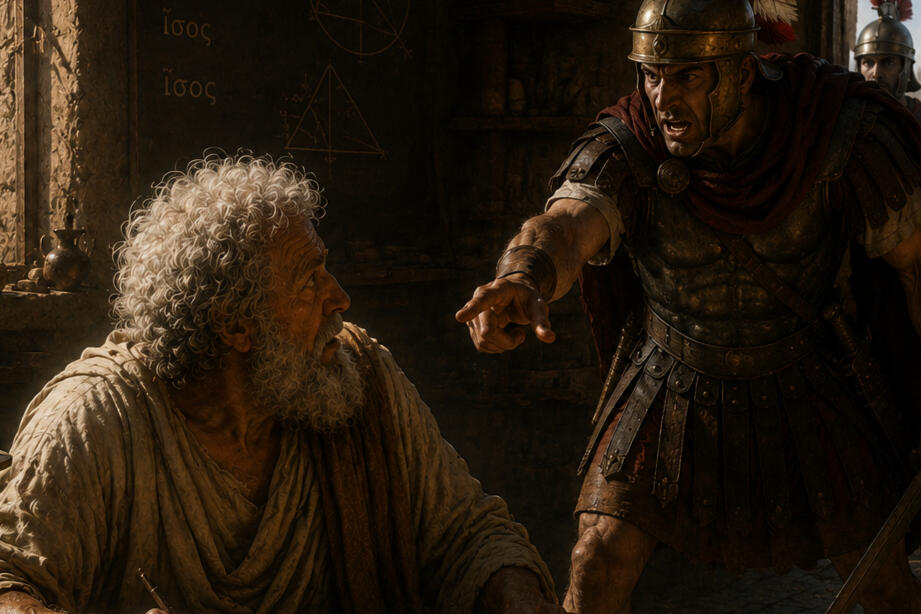
According to tradition, after the fall of Syracuse in 212 BC, Archimedes was solving a mathematical problem when a Roman soldier ordered him to meet consul Marcus Marcellus but he refused to leave before completing his work.Ancient writers claim that the legionary was so incensed l that he killed him on the spot; Archimedes' final words were said to have been: "Do not disturb my circles."
Read More →
Legacy
More than two thousand years after his death, Archimedes remains one of history's most influential thinkers. His discoveries in engineering, geometry, mathematics, and mechanics lay the foundations of modern science.
Read More →
Continue Exploring
The Greco-Roman World is a growing library of articles and resources dedicated to classical antiquity and its enduring legacy.